Tarak Dhurjati
India’s sugarcane economy is at an inflection point. For decades sugarcane has supported millions of farmers and powered a large agro-industrial complex of mills and allied industries. Today, however, rising use of maize and even surplus rice as alternative feedstocks for sweeteners, starch and ethanol — combined with shifting farmer choices and policy nudges — are contributing to a steady contraction in sugarcane area and are squeezing the economics of the sugar-processing sector.
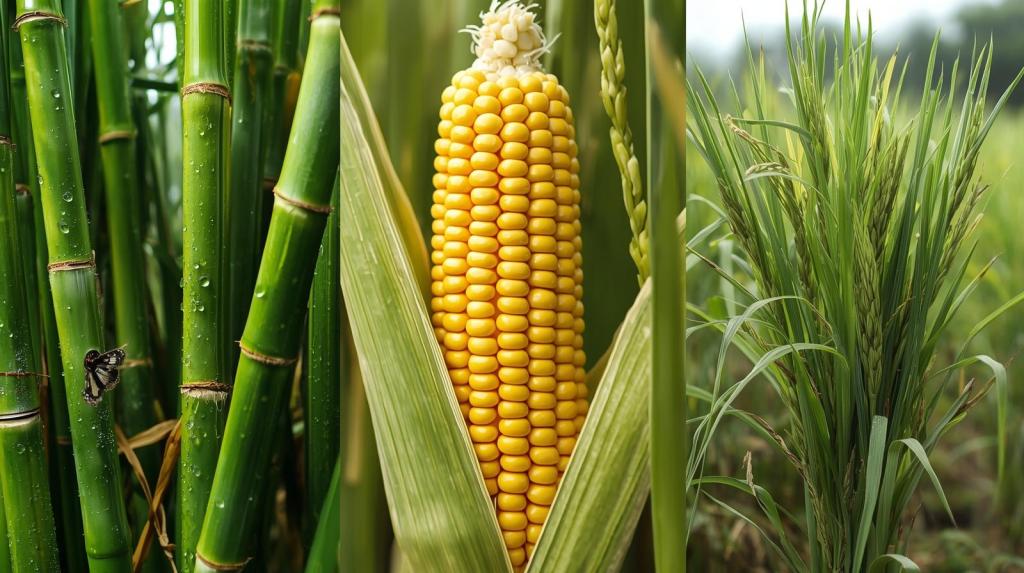
Why maize and rice are attractive alternatives
Cost and cycle advantages
The cultivation cost for sugarcane is relatively high.By contrast, maize cultivation has a lower cost base in many regions. For rice, cost of cultivation data vary widely by region depending on the abundance of irrigation water. While Maize can be grown as both rainfed and irrigated crop, Sugarcane and RIce can be grown only where abundant irrigation is available.
So farmers see maize and rice as potentially lower cost or shorter cycle options relative to sugarcane, especially when factoring in water, labour, and opportunity cost.
Cropping-cycle / land-use flexibility
- Sugarcane is a long‐duration crop (often 10–12 months or more, including ratoons) requiring continuous field occupancy, irrigation, and management.
- By contrast, maize (in many zones) can be planted and harvested in a much shorter span (say a single season), freeing land sooner for subsequent crops.
- Rice (depending on type) also often fits into annual cropping cycles (or multiple cropping in favourable zones) and in some surplus‐grain years can be diverted to industrial uses (including ethanol, starch).
This flexibility means farmers can free up land and shift towards crops that respond faster, require less water, or provide earlier returns, rather than being locked into sugarcane.
How this is affecting farmer decisions and cultivated area
Farmers decide crops based on returns, water requirements, input risks and market signals. Maize has certain advantages in many regions: shorter crop cycle, lower water needs (in some contexts), faster cash realisation, and often better or more stable returns from grain markets or contract arrangements with processors and ethanol plants. Where maize (or other cereals) pays better or carries lower agronomic risk, some farmers are reducing area under sugarcane or avoiding replanting ratoons.
Because sugarcane cultivation ties up land for long durations, if maize or rice present a viable alternative with lower cultivation cost and quicker turnover, it becomes logical for farmers to shift. This cropping‐shift reduces the area available for cane, which in turn erodes the base of feedstock for the sugar processing industry.
Direct impacts on mills and sugar‐processing
Less cane on the ground means mills face lower crush volumes and potentially lower recovery (sugar per tonne of cane). The consequences:
- Many mills have reported reduced operations or temporary closures in weak seasons when cane availability is poor.
- Margin squeeze: with lower crush volumes and fixed costs of milling (plant, labour, utilities), profitability worsens.
- Shift in product mix: mills increasingly look to produce ethanol (including grain‐based) or co-generation, but competition arises from maize/rice based ethanol plants which may be more cost-efficient feedstock‐wise.
Policy, market interactions and unintended effects
Policy choices intended to stabilise energy supplies and help farmers (e.g., ethanol blending targets) have complex knock-on effects. For example: higher ethanol blending targets encourage use of grain (maize, rice) into ethanol rather than relying solely on cane; this reduces cane’s relative attractiveness for mills. When farmers see viable grain markets, they allocate land accordingly.
Cropping-area shift: freeing up land from long-duration sugarcane
Another important aspect is land use intensity and cropping frequency:
- Sugarcane often occupies a field continuously for a long period (sometimes more than one season via ratoons), which means that land is locked for much of the year and cannot be used for a second crop or rotated easily.
- Maize or rice allow the farmer to fit in a crop, harvest, and then either go to a second crop or prepare for the next season. The faster turnover can improve land‐productivity (in terms of income per unit time) and encourage farmers to favour those crops.
- In effect, choosing maize or rice instead of sugarcane means the land is freed earlier, risk of prolonged investment is lower, and the capital, labour and water tied up are released sooner — making them more attractive compared to the heavy, long-duration investment in cane.
Implications for the future of India’s sugar economy
Several plausible outcomes emerge:
- Structural consolidation – Persistent lower cane availability and volatile sugar prices may force inefficient mills to consolidate or exit, concentrating production among larger, better-diversified units.
- Dual-track processors – Mills will increasingly diversify into ethanol, power and co-generation, jaggery, specialty sweeteners — to hedge the sugar cycle.
- Policy balancing act – Authorities will need to calibrate ethanol feedstock policy, procurement rules, and cane support mechanisms so that the shift to maize/rice does not undermine cane growers and the sugar industrial base.
- Farm‐level adaptation – Farmers will continue to choose crops that maximize net returns per hectare per unit of water and time. Thus, water‐intensive, long-duration sugarcane will increasingly lose out in many regions unless returns improve significantly or new support is introduced.
Conclusion
In short: maize and rice have become powerful alternative sources of sugar and starch in India’s industrial ecosystem — driven by ethanol policy, market economics, and surplus grain management. That substitution, combined with climate, water and labour pressures, is reshaping farmer choices and reducing sugarcane area in some key regions. The sugar-processing industry (historically the anchor of rural economies in many states) now faces a twin challenge of securing feedstock and re-engineering business models for a world where cereals play a much bigger role in the sweetener and biofuel mix. Policymakers, industry and farmers will need to coordinate closely to manage the transition while balancing energy, food, water and rural‐livelihood imperatives.

 SAMSIDDHA@AI