by Tarak Dhurjati
1. What is a Microbiome?
The term microbiome refers to the collective community of microorganisms—bacteria, fungi, archaea, protozoa, and viruses—along with their genetic material, that inhabit a specific environment. These microbial communities interact among themselves and with their physical surroundings to maintain ecological balance and functional stability.
In the context of soil, the soil microbiome encompasses the vast and diverse population of microorganisms living in the soil ecosystem. It is one of the most complex microbiomes on Earth, forming the biological foundation of terrestrial life by driving nutrient cycling, soil structure formation, and plant growth.
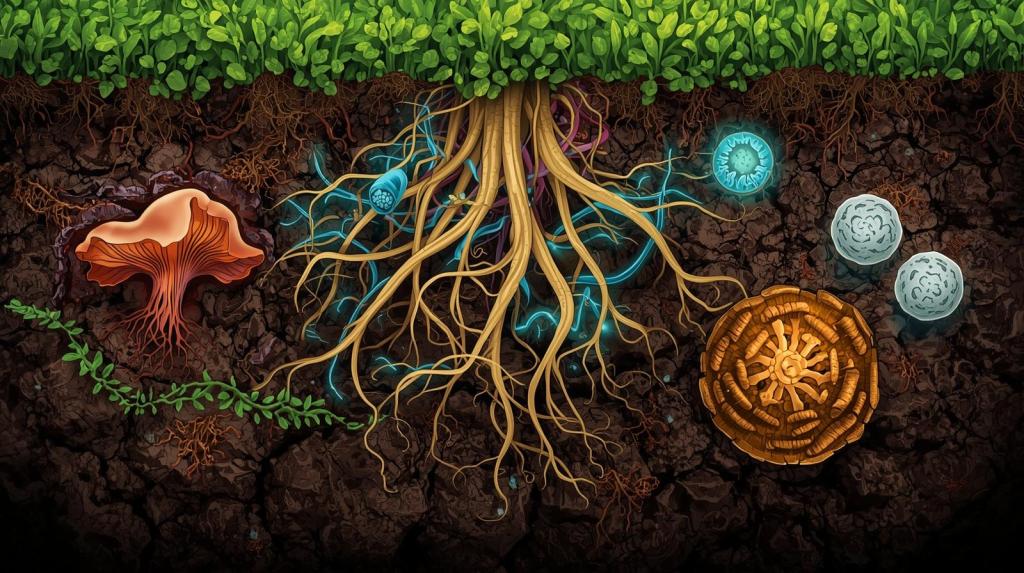
2. The Flora and Fauna of the Microbiome: Comparing Soil, Rumen, and Gut Ecosystems
Just as the human gut microbiome and the rumen microbiome in ruminant animals support digestion and health, the soil microbiome plays an analogous role in ecosystem health.
| Feature | Soil Microbiome | Rumen Microbiome | Gut Microbiome |
|---|---|---|---|
| Habitat | Soil particles, rhizosphere (root zone) | Stomach of ruminants (e.g., cattle) | Intestine of animals and humans |
| Major Microbial Groups | Bacteria (Actinobacteria, Proteobacteria), Fungi (Mycorrhizae), Archaea, Protozoa | Bacteria (Firmicutes, Bacteroidetes), Archaea (methanogens), Protozoa | Bacteria (Bacteroides, Lactobacillus), Yeasts, Viruses |
| Primary Function | Nutrient cycling, organic matter decomposition, plant growth | Fermentation of cellulose and fiber digestion | Digestion, immunity, and metabolic regulation |
| Energy Source | Organic residues and root exudates | Plant fiber, cellulose | Dietary carbohydrates, fats, proteins |
| Outcome | Soil fertility and plant productivity | Animal growth and methane production | Health and metabolism of host |
The soil microbiome, therefore, acts as the digestive system of the Earth, transforming organic and inorganic matter into plant-available nutrients—just as the rumen and gut microbiomes digest food for animals and humans.
3. Key Microbes of the Soil Microbiome
The soil hosts billions of microorganisms per gram of soil. Some key groups include:
- Bacteria:
- Rhizobium, Azospirillum, Bacillus, Pseudomonas, Actinobacteria – known for nitrogen fixation and phosphate solubilization.
- Fungi:
- Aspergillus, Penicillium, Trichoderma, and Mycorrhizae (AMF – Arbuscular Mycorrhizal Fungi) enhance nutrient uptake and root development.
- Archaea:
- Important in nitrogen and sulfur cycling, particularly under extreme or anaerobic conditions.
- Protozoa and Nematodes:
- Feed on bacteria and fungi, helping regulate microbial populations and nutrient turnover.
These organisms form intricate food webs and symbiotic relationships that sustain soil fertility.
4. The Rhizosphere and the Role of Plant Growth-Promoting Rhizobacteria (PGPR) and Fungi
The rhizosphere is the narrow region of soil directly influenced by plant roots and their secretions (root exudates). It is a hotspot of microbial activity, often described as a “microbial city” where plants and microbes communicate chemically.
- Plant Growth-Promoting Rhizobacteria (PGPR):
These bacteria, such as Bacillus subtilis, Pseudomonas fluorescens, and Azospirillum brasilense, colonize the rhizosphere and assist plants by:- Fixing atmospheric nitrogen
- Solubilizing phosphates and zinc
- Producing phytohormones (IAA, gibberellins)
- Inducing systemic resistance against pathogens
- Plant Growth-Promoting Fungi (PGPF):
Trichoderma and Mycorrhizae improve nutrient uptake (especially phosphorus and micronutrients), root morphology, and tolerance to stress.
Together, PGPR and fungi form a synergistic network that enhances bioavailability of nutrients, plant resilience, and overall crop productivity.
5. The Importance of Organic Matter for Microbiome Survival
Organic matter (OM)—composed of plant residues, decomposed biomass, and humus—is the primary energy source for soil microbes. It acts as a carbon reservoir, water sponge, and habitat structure for microbial life.
High organic matter ensures:
- Sustained microbial populations
- Stable soil aggregates and porosity
- Enhanced nutrient cycling and cation exchange capacity
When organic matter declines, microbial populations lose their substrate base, leading to reduced activity and nutrient turnover.
6. The Indian Scenario: Declining Organic Matter and Microbial Diversity
Indian soils, once rich in organic carbon (0.8–1.5%), have now declined to less than 0.3–0.5% in most regions due to:
- Excessive use of chemical fertilizers
- Burning of crop residues
- Limited application of compost or manure
- Intensive monocropping
This decline has led to microbial extinction in the soil, lower enzymatic activity, and reduced nutrient mineralization—resulting in stagnant crop yields despite high input use. Essentially, soils are becoming physically alive but biologically dead.
7. Replenishing the Microbiome through Regenerative Agriculture
Scientific studies and field experiments across India and abroad show that restoring organic matter and microbial life through regenerative agriculture practices can reverse soil degradation.
Key findings:
- Application of biofertilizers, compost teas, and microbial consortia (including Rhizobium, Azotobacter, Trichoderma, and Mycorrhizae) significantly increased microbial diversity and crop yield by 20–40%.
- Cover cropping and minimal tillage improved soil organic carbon and microbial biomass carbon by over 30%.
- Integrated nutrient management (INM) combining organics with reduced chemical fertilizers restored enzyme activity and soil respiration rates.
For instance, trials in Maharashtra and Telangana under ICAR and FAO-supported programs showed yield increases of 15–25% in maize, groundnut, and rice when microbial inoculants and organic composts were applied regularly.
8. The Way Forward
To rebuild India’s soils as living ecosystems, the following strategies are essential:
- Adopt Regenerative Agricultural Practices – Encourage minimal tillage, crop rotation, residue retention, and use of biofertilizers.
- Build Organic Carbon Reservoirs – Promote composting, green manuring, and organic amendments.
- Microbiome-based Inputs – Scale up microbial inoculant industries focusing on region-specific strains.
- Soil Health Monitoring – Integrate biological indicators (microbial biomass, enzymatic activity) into soil testing programs.
- Farmer Education and Policy Support – National missions like the Bharat Organic Carbon Mission can drive awareness and incentives for soil rejuvenation.
Conclusion
The soil microbiome is the unseen life force that sustains terrestrial productivity and global food security. Just as gut health determines human vitality, soil microbial health determines the vitality of our farms and ecosystems. Restoring and nurturing the soil microbiome is not merely a scientific goal—it is a necessity for the future of sustainable and regenerative agriculture in India.
AI tools have been used to prepare the article in addition to using information from the public domain.

 SAMSIDDHA@AI