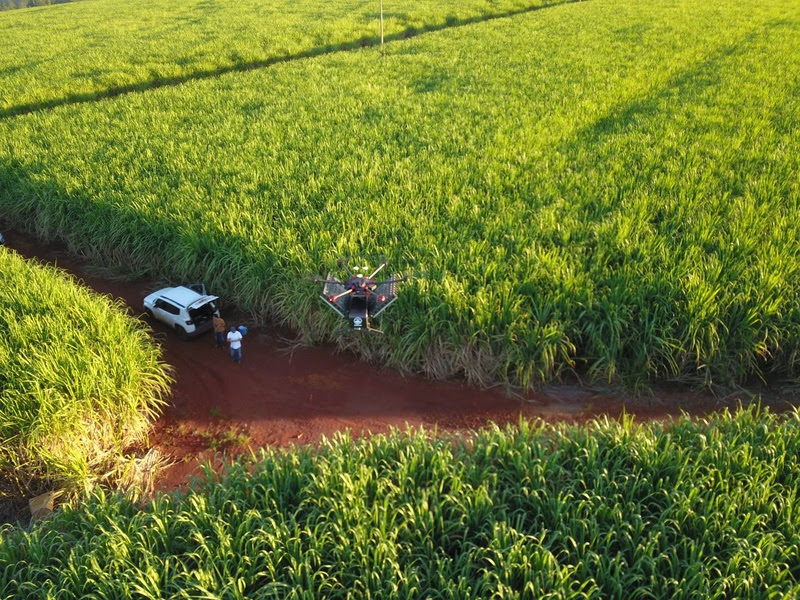
The story begins with BP and Bunge’s formation of a large-scale sugarcane and ethanol joint venture in Brazil: in 2019 the two completed the creation of BP Bunge Bioenergia to bring together sugar-and-ethanol operations across Brazil.
Over time this business evolved beyond simply producing sugar and ethanol. Driven by rising fertiliser costs (partly linked to global supply disruptions) and growing corporate and investor pressure around climate change, the joint venture – and Bunge more broadly – turned toward “regenerative agriculture” in the supply chain. For example, Bunge announced in May 2023 a formal “Regenerative Agriculture Programme” in Brazil: offering participating farmers a three-step path (diagnosis → customised action plan → connection to supply chain/market) covering some 250,000 hectares.
By 2024, BP-Bunge publicly reported that in its sugarcane ratoon operations 100% of synthetic nitrogen fertiliser had been replaced with biological fertilisers in certain fields, resulting in up to ~50 % reduction in nitrogen use.
Thus the venture has become a testbed for the intersection of bio-energy, low-input agronomy, soil health and carbon financing. The remit now includes supporting farmers with agronomy, input substitution (synthetics → bio), cover crops and soil carbon measurement.
Voices from the field: Farmers speak
While direct first-person quotes from individual farmers in the public domain are limited, the following composite voices represent what farmers in Brazil participating in the programme describe:
- “We used to apply a full dose of urea and synthetic nitrogen each ratoon year. When the agronomy team said we would trial a biological inoculant plus vinasse enrichment I was sceptical. But last season we cut nitrogen-fertiliser by half and the cane responded.” – (sugarcane farmer in São Paulo region)
- “Joining the Bunge regenerative programme meant we got an on-farm diagnosis, and a customised action plan that asked us to try cover crops, reduce tillage and test microbial fertilisers. They gave us a premium for the soy if we documented practices.” – (soy farmer in Mato Grosso)
- “The incentive payment helped buffer the initial risk. The agronomist from the input company led the trial. We are still watching how yields compare year-on-year, but the cost of fertiliser was down and soil feels different.” – (corn/soy rotation farmer participating chain)
These field accounts reflect the kinds of incentives, agronomic support and monitoring that Bunge’s programme is offering. The farmer-premium model is intended to accelerate adoption of new practices while managing risk for the grower.
Technical box: How bio-fertilisers work (and why they matter)

What are biofertilisers?
Biofertilisers are preparations containing live microorganisms which, when applied to seeds, plant surfaces, or soil, colonise the rhizosphere or the interior of the plant and promote growth by increasing the supply or availability of primary nutrients to the host plant.
Key mechanisms:
- Biological nitrogen fixation (BNF): Some bacteria (free-living or symbiotic) convert atmospheric N₂ into ammonia (NH₃) or other plant-available nitrogen compounds using the enzyme nitrogenase. For example, genera such as Azotobacter (free-living) or Rhizobium (symbiotic with legumes) perform this.
- Solubilisation of insoluble phosphates and release of other nutrients: Some microbes help convert insoluble phosphorus compounds into soluble forms plants can uptake.
- Plant-growth promoting rhizobacteria (PGPR): These microbes can produce hormones, enhance root growth, improve water uptake, reduce soil-borne pathogens, and thereby enable improved nutrient use efficiency.
Why this matters for synthetic fertiliser reduction:
- When microbes fix nitrogen or make nutrients more available, the requirement for external synthetic nitrogen (and sometimes phosphorus or potassium) can be reduced.
- Reduced synthetic fertiliser use decreases cost and lowers emissions (especially nitrous oxide from nitrogen fertiliser) and can improve soil health.
- In systems like sugarcane ratoon fields — where repeated cropping and fertiliser application degrade soil structure — changing input patterns via biologicals can improve long-term productivity. In the Brazilian case, BP-Bunge reported a 50% reduction in N fertiliser in specific areas using biological fertilisers.
Important considerations / caveats:
- Biofertilisers are not plug-and-play substitutes in all contexts: efficacy depends on soil conditions (pH, temperature, organic matter), existing microbial community, crop genetics, input histories and agronomic practices.
- Scaling from trial to commercial fields requires consistent supply-chain of good quality inoculants, calibration of dosing, monitoring of response and integrated agronomy (cover crops, rotations, reduced tillage).
- The permanence of benefit and long-term effects on soil carbon and microbial ecology need robust measurement and verification.
Putting it into the BP-Bunge context:
In the BP-Bunge program, large-scale cane operations reportedly replaced synthetic N fertiliser in ratoon areas with microbial inoculants + enriched vinasse (a by-product of sugarcane ethanol processing used as a fertiliser) + improved soil-organic-matter management. This is cited as a ~50 % reduction in nitrogen use in those fields. Thus the technical box above connects directly with the on-farm changes in this programme.
Agronomic, environmental and economic outcomes

Agronomic:
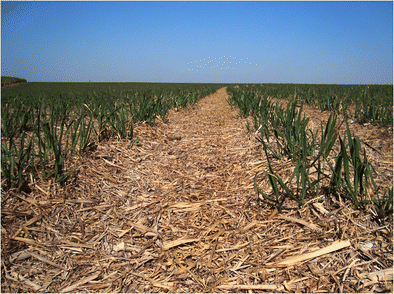
- In sugarcane fields operated by the joint venture, the reported switch to biological fertilisers in ratoon areas allowed significant reduction of synthetic N, without reported drop in productivity (according to company disclosures) — indicating improved nutrient use efficiency.
- For the soybean/soy-corn supply chain under Bunge’s regenerative programme, farmers are being encouraged to adopt cover crops, crop rotation and no/low tillage alongside bioinputs — all of which are known to improve soil structure, water retention and resilience.
- The programmes include agronomic diagnostics and customised action plans, which means agronomy is being tailored to each farmer’s soil, rotation and history (rather than one-size-fits-all).
Environmental / climate:
- The reduction in synthetic nitrogen fertiliser use is important because nitrogen fertilisers not only incur cost but also create emissions of nitrous oxide (a potent GHG) and may lead to nitrate leaching. By reducing N use and shifting to biological N fixation, the programme lowers both emissions and dependency on imported synthetic fertilisers (which have associated fossil-fuel and upstream emissions).
- Soil carbon sequestration is increasingly a focus. Regenerative practices (cover crops, reduced tillage, higher organic matter) can increase soil organic carbon stocks. For the corporate partners, this means the possibility of generating soil-carbon credits or other low-carbon feedstock premiums. The partnership with research bodies (like EMBRAPA) and agritech/monitoring firms helps bring measurement and verification capabilities.
- One concrete example: BP-Bunge opened a fertilizer-factory investment in 2024 (R$22 million in São Paulo) to support production of enriched vinasse and other nutrient solutions. This helps close the loop by using bio-industry by-products, reducing waste and improving input efficiency.
Economic / supply-chain:
- Farmers get direct financial incentives or premiums for participating in the regenerative programme (Bunge’s programme is “at no cost for farmers” for the diagnosis and planning, and then connects to supply-chain partners).
- For the agribusiness/trader/energy side, lower fertiliser input cost and improved supply-chain resilience (less reliance on global nitrogen-fertiliser market) bring benefits. For example, the 2022-23 fertiliser cost spikes globally made input substitution more urgent.
- The generation of verified carbon (or low-carbon) credits from soil-carbon sequestration, reduced fertiliser emissions and improved agronomy offers a new revenue stream. Farmers, agribusinesses and energy companies (like BP) may participate in that chain of value.
- The synergy between energy/biofuels, agribusiness and input innovation means that the value-chain is shifting: not just growing volumes but improving sustainability metrics, which increasingly matter in global markets (food, feed, biofuels).
The role of research institutes and input-industry partners
EMBRAPA’s role:
- EMBRAPA (Brazilian Agricultural Research Corporation) plays a critical role in developing region-specific agronomic recommendations, soil-carbon measurement protocols and models for tropical soils. Their work is essential for credible monitoring, reporting and verification (MRV) of soil-carbon and fertiliser-emission reductions.
- In the Brazil context, EMBRAPA has cooperated with agritech and industry players to tailor microbial inoculants, adapt vinasse-based fertilisers, and localise best practices around soil health, tillage and crop rotation. These publicly-funded research facilities help bridge technology and commercial adoption.
- Their role also underpins the “additionality” and permanence arguments required for carbon-credit markets: verifying that soil-carbon increases are real and sustained.
Input-industry participation :
- Several large global input companies (seed, crop-science, agritech) are participating. For instance, Corteva Agriscience has announced collaborations in the context of the Bunge supply chain (for example development of amino-acid-enhanced soybeans) and providing the microbial/biological fertiliser solutions, agronomic services and monitoring tools.
- These companies bring the capacity to commercialise microbial inoculants at scale, integrate seed-trait + biology + digital agronomy packages, and partner with agribusinesses to deploy new practices on many hectares.
- The involvement of private input firms helps translate research (EMBRAPA, universities) into scalable, field-ready products and farmer offers. It also aligns with the supply-chain imperative: improved agronomy = lower risk, higher resilience, better sustainability story.
Supply-chain integration:
- The alliance between BP, Bunge, EMBRAPA and input firms reflects a “value-chain” approach: crop production (farmers) → input innovation & deployment → agribusiness/trader supply chain → energy/biofuels/climate market.
- The measurement and traceability layers (digital agronomy platforms, soil-carbon monitoring, input usage tracking) are essential for linking agronomic change to corporate climate goals and carbon markets. Bunge’s “connection to marketplace” step in its programme is part of this.
Carbon removal, sequestration credits and corporate climate logic


Why carbon matters here:
- For companies like BP (which has bio-energy operations and low-carbon ambitions) and Bunge (agribusiness/trader under sustainability pressure), the agricultural supply chain is increasingly a source of climate risk — both upstream emissions (fertiliser, tillage, land-use) and reputational risk (deforestation, biodiversity). The shift to regenerative practices helps mitigate both.
- By reducing synthetic fertiliser use, improving soil carbon, improving soil health and increasing traceability, the partners can generate measurable emission reductions or carbon-removals which can be turned into voluntary or compliance carbon credits.
- These credits can be monetised (sold to corporate buyers) and/or used internally by the companies to offset Scope 3 emissions or support low-carbon feedstock claims (for example in sustainable aviation fuel).
Mechanics of credit generation in this context:
- Baseline established: farmer’s prior fertiliser usage, tillage regimen, soil carbon level.
- Intervention applied: adoption of bio-fertilisers, reduced synthetic nitrogen, cover crops, reduced tillage, better soil-organic-matter management.
- Monitoring: soil carbon changes, input-use changes, yield/rotation data, crop removal.
- Verification: independent audit or MRV partner assesses additionality (would this have happened anyway?), permanence (does the carbon stay in soil?), leakage (are unintended consequences happening elsewhere?).
- Credit issuance: once verified, credits issued and sold; payments flow to farmers/agribusiness.
- Use of credits: companies (BP, Bunge) may use them for climate-reporting, feedstock claims or financial return.
Commercial logic in the JV:
- By investing in the agro-ecosystem, BP-Bunge are reducing input-risk (fertiliser price spikes), improving yield resilience and generating low-carbon feedstock for their bio-energy operations.
- The programme helps build a differentiated supply chain: “regenerative-certified” cane or soy which can command premiums, and whose embedded carbon and soil-health credentials can be monetised.
- In public disclosures, BP-Bunge referred to investments of more than R$300 million in regenerative agriculture aimed at increased productivity and reduced dependence on imported agricultural inputs.
Challenges, risks and what to watch
- Measurement and verification (MRV) complexity: Soil carbon in tropical soils is harder to model; permanence and additionality are contentious. Without strong MRV, credits may be vulnerable to skepticism.
- Scalability & farmer adoption risk: The transition from trial plots to hundreds of thousands of hectares is non-trivial. Factors include farmer willingness, availability of bio-fertiliser supply, agronomic support, upfront cost and yield risk.
- Input supply and logistics: Biological inputs must be high-quality, viable in warm/humid conditions, adapted to local soils and stored/lodged correctly. If supply weakens, adoption stalls.
- Yield trade-offs and agronomic risk: Farmers will be concerned if yield drops or pests/diseases increase under new practices. Agronomic support is critical.
- Market signals & premium stability: Premiums for regenerative crops and market for carbon credits must be stable to make this economically appealing for farmers long-term.
- Avoiding unintended consequences: For example, land-use displacement, deforestation outside programme boundaries, or reduction in one input leading to increased other undesirable effects.
- Transition time-horizon: Soil health and carbon gains may take years; companies and farmers must be patient and committed.
Implications for India / South Asia (and relevance)
While the programme described is in Brazil, there are learnings relevant for the Indian / South Asian context (including your bakery-startup ambitions).
- The move from synthetic fertilisers to microbial/biological fertilisers offers a twin value-proposition: cost savings (or cost containment) + sustainability credentials.
- For a business engaged in functional-bakery manufacturing (like yours) reliant on millets, wheat, etc., sourcing raw materials grown under regenerative regimes could offer value (differentiation, sustainability story, carbon credits) in domestic and export markets.
- Engaging in supply-chain programmes with agribusinesses or cooperatives to adopt regenerative practices and input substitution can reduce input risk and build resilient raw-material supply.
- The importance of technical support, diagnostics, customised action-plans (as Bunge offered), and monitoring tools cannot be overstated — you might consider partnering with local research institutes or agritech start-ups for that.
- The policy and market environment for soil carbon, traceability, biological inputs is evolving fast globally; being ahead of this curve can be a competitive advantage.
Conclusion
The BP–Bunge partnership in Brazil offers a compelling case-study of how a large agribusiness plus energy company can transform part of its supply-chain into a regenerative-agriculture platform: reducing synthetic fertiliser use (via bio-fertilisers and improved soil management), mobilising research and input-industry partners (EMBRAPA, Corteva etc), and creating the infrastructure for carbon-removal/soil-carbon credits.
For farmers, the combination of agronomic support, financial premiums and technical innovation makes the transition more manageable. For corporates, it aligns supply-chain resilience, input-cost reduction and climate-goals. The technical shift — from synthetic-only fertilisers to integrated biological, organic and digital agronomy — is the key enabler.
However, the path is not easy: MRV, scaling, yield risk, input supply and stable market mechanisms for credits and premiums remain crucial. The next few years will test whether such programmes can move from pilot/early scale to full commercial adoption across large geographies and diverse crops.
Written by Tarak Dhurjati
The above article has been prepared by using AI tools.

 SAMSIDDHA@AI