How sustainable crop protection works by breaking insect population cycles, not poisoning fields
Pest control is not about extermination, but balance. By disrupting insect mating and keeping pest populations below economic thresholds, pheromones and semiochemicals offer a proven, sustainable way to protect crops, farmer incomes, and food safety—without collateral ecological damage.
Rethinking pest control: from killing insects to managing populations
For decades, agriculture has treated pest control as a war of elimination: spray, knock down, and spray again. While this approach delivered short-term relief, it also created long-term problems—resistance, loss of beneficial insects and pollinators, rising input costs, and increasing pesticide residues in human and animal food chains.
Modern crop protection science is clear on a fundamental point: pest management is not about killing every insect. It is about keeping pest populations below the Economic Threshold Level (ETL)—the point at which pests begin to cause economically significant yield or quality losses. Below this level, crops remain productive, residues remain low, and ecosystems remain functional.
This is where pheromones and semiochemicals fit naturally. They do not promise eradication. Instead, they help farmers control population build-up by working with insect biology and behaviour rather than against it.
Behavioural control: how pheromones actually work
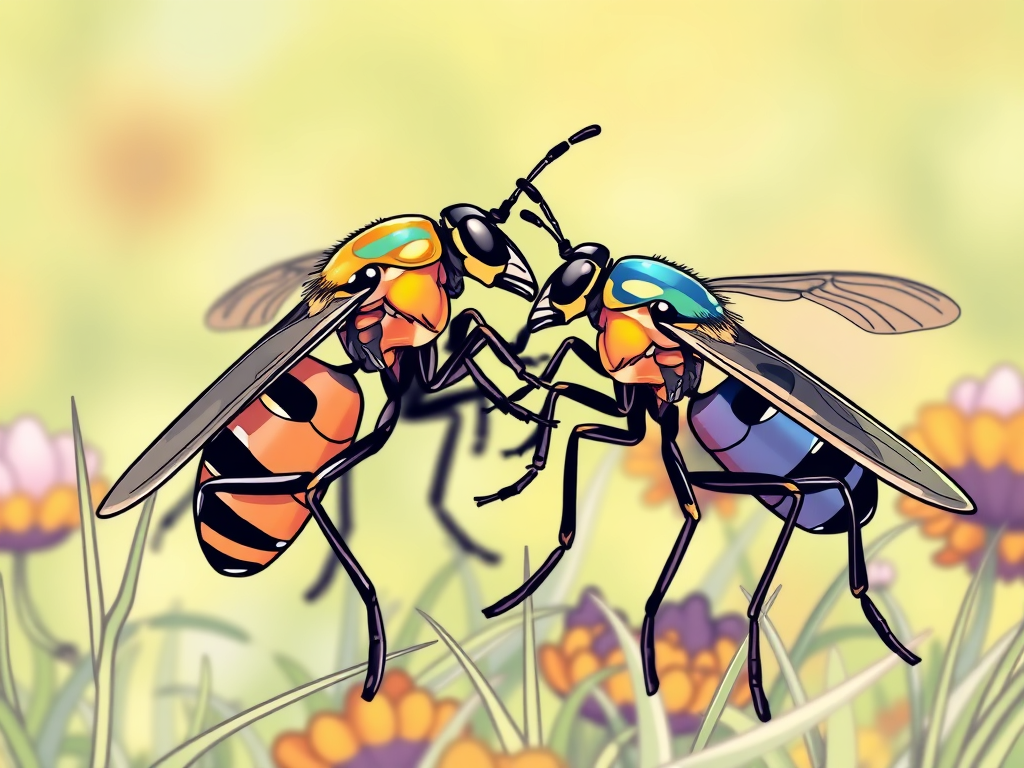
Insects rely heavily on chemical signals to find mates, locate hosts, and coordinate reproduction. Semiochemicals exploit this dependence through highly targeted tools:
- Mating disruption (MD): saturates a crop area with synthetic sex pheromones so male insects cannot find females, sharply reducing successful mating and future generations.
- Attract-and-kill systems: lure pests to small, targeted kill points using very small amounts of insecticide.
- Mass trapping / male annihilation: physically removes large numbers of adult insects from a defined area.
- Monitoring traps: provide early warning and guide precise, need-based interventions.
These tools are species-specific by design. That specificity is often misunderstood as a limitation, but it is in fact their greatest advantage: pheromones do not harm beneficial insects, pollinators, soil organisms, livestock, or humans.
In organic agriculture regulated under the United States Department of Agriculture, pheromones are explicitly recognized as non-toxic, effective pest management tools—demonstrating that this approach is neither experimental nor fringe.
A realistic view: smart tools, not silver bullets
Pheromones and semiochemicals are not magic solutions. They:
- Act on specific pests, not all insects
- Often require wide-area deployment to work well
- Do not give instant “knockdown” results like contact poisons
Yet when used where they fit best—against dominant pests that drive economic damage—they deliver excellent return on investment. Savings come not from killing more insects, but from:
- Fewer and better-timed sprays
- Lower resistance pressure over time
- Reduced residue risk and better market acceptance
- More stable yields in outbreak years
In short, pheromones do not replace chemistry entirely—but they reduce unnecessary and hazardous chemical use, which is exactly what sustainable crop protection demands.
Why mating disruption must be a campaign, not a product
Mating disruption works best only when deployed across contiguous areas—village clusters, FPO command areas, orchard belts, or irrigation commands.
Fragmented adoption fails because:
- Mated females migrate from untreated fields
- Untreated “islands” act as continuous pest reservoirs
- Edge effects overwhelm individual farms
Global experience shows a consistent lesson: mating disruption succeeds when treated as landscape infrastructure, not as an individual farmer input. This is why public facilitation and collective action are critical.
Global proof: managing pests without collateral damage
Apples and pears, USA
Area-wide codling moth programs led by the USDA Agricultural Research Service covered nearly 10,000 hectares across hundreds of growers. Broad-spectrum insecticide use dropped by roughly 75%, fruit quality improved, and production became more predictable. Today, mating disruption is standard practice in most commercial apple orchards in Washington State.
Lesson: success is measured in fewer rejects and stable grades—not insects killed.
Vineyards, California
When the European grapevine moth threatened the wine industry, authorities deployed coordinated mating disruption under the California Department of Food and Agriculture. The pest was officially eradicated by 2016.
Lesson: pheromones are powerful tools for biosecurity and export risk management.
Storage and processing facilities
Across warehouses and food plants, pheromone-based programs suppress moths and beetles at facility scale, reducing dependence on fumigation and improving worker and food safety—highly relevant for India’s expanding post-harvest sector.
India’s moment: manage pests, protect farmers, protect food
In India, Pheromones are synonymous with Lures and Sticky traps for monitoring the buildup of pest population for undertaking chemical pesticide sprays and not focused on enmasse behavioural modification of the pest on a wide area through mating disruption technology (MDT) strategies. The small holder farm nature in India is also an important reason for hurdles in large scale deployment of MDT. Particularly in crops like Cucurbits, Fruit crops, Tomato, Rice, Cotton, Pulses, Maize, etc., where Pheromones /Semio-chemicals are readily available, deployment of MDT schedules can certainly deliver sustainable outcomes. FPOs, Farmer Cooperatives, Commodity companies and Agricultural extension both from public and private sector has to play a key role to make this happen.
Cotton and pink bollworm
Pink bollworm is one of India’s most economically damaging and resistance-prone pests. Monitoring using pheromone traps is already mainstream, and large field demonstrations of mating disruption in cotton show that population suppression—rather than eradication—is sufficient to protect yields.
India’s regulatory framework—through the Central Insecticides Board and Registration Committee and Plant Protection Quarantine and Storage—already accommodates semiochemicals via proportionate, low-risk pathways. Domestic companies such as ATGC Biotech, PI Industries, and Natco Pharma are increasingly capable of campaign-scale deployment.
Policy insight: ETL, not eradication
Effective pest management is not about eliminating insects.
It is about keeping pest populations below the Economic Threshold Level (ETL)—where crops suffer no significant yield, quality, or residue losses—while protecting beneficial insects, ecosystems, and farmer incomes.
This principle lies at the heart of Integrated Pest Management (IPM) doctrine worldwide.
For farmers: what this means in practice
You do not need to kill every insect to protect your crop. Most pests cause damage only when their numbers become too high.
Pheromone-based tools:
- Stop insects from mating and multiplying
- Reduce the next generation of pests
- Protect bees and beneficial insects
- Reduce the need for frequent spraying
When pests stay below the damage level, farmers get good yields, better quality, and safer produce—especially when everyone in a village or FPO cluster works together.
Does it pay? A simple cost–benefit view
Cotton (pink bollworm, per acre, indicative):
- Spray-heavy approach: ₹6,000–₹9,000 on 5–7 sprays, with rising resistance risk
- Area-wide pheromone IPM: ₹4,000–₹6,000 (mating disruption + 1–2 selective sprays)
Outcome:
₹2,000–₹3,000 per acre savings in normal years, plus greater yield stability in bad years and lower resistance pressure.
In fruits, even a 5–10% improvement in marketable grade often pays back the full pheromone cost. In vegetables, fewer sprays close to harvest mean safer produce and better consumer trust.
The bigger message: sustainable crop protection by design
Pest control does not require extermination. It requires understanding biology, managing populations, and choosing the right tool for the right pest. Pheromones and semiochemicals—despite being species-specific and requiring coordination—fit perfectly into a smart crop protection strategy with strong returns to farmers.
The global evidence is clear: you don’t need to kill the pest.
You only need to stop it mating, slow its population build-up, and keep it below the economic damage threshold.
That is sustainable crop protection—by design, not by accident.

 SAMSIDDHA@AI