
A CRITICAL LOOK AT INDIA’S SEEDS BILL, 2025
Tarak Dhurjati
Seeds are not merely inputs. They are compressed packets of genetics, science, history, and power. How a nation regulates seeds ultimately determines who controls agricultural productivity, farmer choice, and food sovereignty.
India’s Seeds Bill, 2025, which seeks to replace the Seeds Act of 1966, is an ambitious attempt to modernise seed regulation for a 21st-century agricultural system. It introduces traceability, tighter quality control, and a national registration regime for plant varieties. On paper, it looks robust. In practice, however, the Bill sits at a critical crossroads—between genetic stewardship and market dominance, between farmer sovereignty and corporate efficiency.
This article examines whether the Bill truly delivers on its stated goal: making quality seeds of improved plant varieties available to farmers at affordable prices while strengthening productivity and national interest.
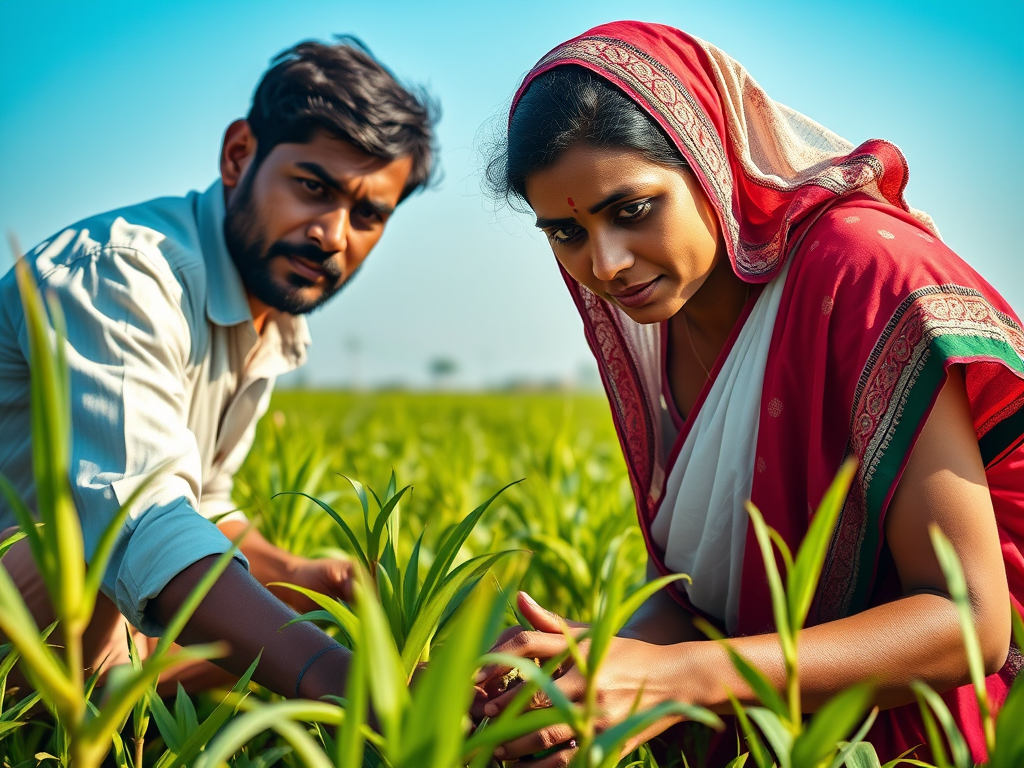
SEED AS ENCAPSULATED GENETICS: A CONCEPTUAL LEAP, NOT A COMPLETE ONE
The most important advance in the Seeds Bill, 2025 is conceptual. For the first time, Indian seed law explicitly recognises seed as genetic material, not merely a tradable commodity. The Bill’s definitions include hybrids, transgenic varieties, parental lines, essentially derived varieties, and vegetatively propagated material. Genetic purity, traits, and seed health are central to registration and sale.
This is a significant departure from the 1966 Act, which treated seed quality largely in physical and germination terms. The new Bill acknowledges that yield, resilience, and performance flow from genetics.
Yet, this conceptual recognition stops short of its logical conclusion.
The Bill applies nearly the same regulatory framework to:
- open-pollinated varieties (OPVs),
- hybrids,
- and genetically modified or biotech-derived seeds.
From a genetics and risk perspective, these are profoundly different categories. OPVs are farmer-reproducible and genetically stable. Hybrids are biologically non-replicable beyond the first generation. GM seeds involve proprietary traits, complex biosafety considerations, and long-term ecological implications.
Treating these categories as regulatory equals is the Bill’s first structural weakness.
FARMERS’ RIGHTS: PROTECTED IN LAW, PRESSURED IN PRACTICE
The Bill explicitly safeguards farmers’ rights to save, re-sow, exchange, and sell farm-saved seed, provided it is not branded. Farmers are also exempt from penalties for selling seed produced on their own holdings.
Legally, this aligns with India’s Protection of Plant Varieties and Farmers’ Rights framework. Politically, it is reassuring.
Economically, however, the picture is less comforting.
By making registration, traceability, certification, and labelling mandatory for commercial seed, the Bill systematically favours formal, capital-intensive seed systems. Informal seed networks—community seed banks, farmer-bred OPVs, local landraces—remain legal but increasingly marginal.
The risk is not criminalisation, but irrelevance by regulation.
Over time, farmers may retain the right to save seed but lose access to competitive markets, extension support, and legitimacy unless they operate within a compliance-heavy framework designed for seed companies.
HYBRID SEEDS: QUALITY CONTROL WITHOUT MARKET DISCIPLINE
Hybrid seeds are where the Bill’s strengths and blind spots intersect most sharply.
On the positive side, the Bill:
- mandates registration based on value for cultivation and use (VCU),
- allows post-registration performance review,
- permits suspension or cancellation for non-performance.
This creates a mechanism to weed out poor-quality hybrids.
What it does not address is economic power.
Hybrid seeds function as built-in monopolies: farmers must repurchase every season. The Bill allows price regulation only in “emergent situations” such as scarcity or abnormal price rise. There is no requirement for routine price transparency, no disclosure of cost-performance ratios, and no assessment of market concentration.
In effect, the Bill regulates biological quality, not economic fairness.
GM AND BIOTECH SEEDS: THE MISSING CHAPTER
Perhaps the most serious omission in the Seeds Bill is its treatment of genetically modified and biotech-derived seeds.
While transgenic varieties are included in definitions and subject to registration, the Bill does not establish:
- trait-level disclosure obligations,
- resistance management requirements,
- post-commercialisation ecological monitoring,
- or a clear liability framework for trait failure.
Instead, it relies on a patchwork of other laws and approvals.
Given the strategic, environmental, and geopolitical implications of biotech seeds, this silence is striking. Countries like Brazil mandate resistance management and stewardship for GM crops. The European Union subjects such seeds to stringent precautionary oversight. The United States relies on liability and litigation.
India’s Bill does none of these explicitly.
SEED QUALITY INFRASTRUCTURE: STRONG ARCHITECTURE, WEAK GENOMICS
The Bill’s chapters on seed testing, certification agencies, inspectors, and laboratories are among its strongest. Central and State Seed Testing Laboratories are empowered. Certification agencies can be accredited, including private and foreign entities. Penalties for spurious and sub-standard seed are severe.
However, enforcement still relies largely on traditional testing methods.
In an era of molecular breeding, hybrid stacking, and gene editing, physical and phenotypic tests are insufficient. Without mandatory DNA-based genetic purity testing, particularly for hybrids and GM seeds, enforcement risks lagging behind innovation.
Quality regulation without genomic tools is regulation with blunt instruments.
TRACEABILITY WITHOUT INTELLIGENCE
The Bill introduces a Centralised Seed Traceability Portal with QR codes on seed packets—a welcome step toward transparency. But the portal is designed primarily as a logistics and compliance tool, not a learning system.
It tracks movement, not meaning.
What it does not capture is real-world performance data: yield deviations, regional failures, resistance breakdowns, or farmer feedback. This is a missed opportunity to build a national seed intelligence system capable of early warning and adaptive governance.
FARMER IMPACT: BETTER SEED, NOT GUARANTEED PROFIT
When viewed through a farmer-impact lens, the Bill delivers mixed results:
- Seed quality will likely improve.
- Availability of certified seed will increase.
- Legal redress mechanisms are clearer.
But:
- seed affordability remains weakly addressed,
- dependence on proprietary hybrids may deepen,
- informal seed systems face gradual erosion.
The Bill improves input reliability, not necessarily farm incomes.
HOW INDIA COMPARES GLOBALLY
Internationally, India’s approach sits uncomfortably between models.
The European Union differentiates sharply between variety types and strongly protects OPVs and public breeding. The United States relies on market forces and litigation, with minimal farmer protection. Brazil combines strong central oversight with mandatory biotech stewardship.
India’s Seeds Bill borrows selectively from each—but without fully adopting the safeguards that make those systems work.
THE STRATEGIC QUESTION
At its core, the Seeds Bill, 2025 asks a fundamental question:
Is seed policy about regulating trade, or governing genetics?
As drafted, the Bill is an improvement over the past. But it remains primarily a market-regulation law, not a genetic governance framework. It risks producing a future where seed quality improves, but control over seed systems narrows.
CONCLUSION: A GOOD BILL THAT NEEDS COURAGEOUS REFINEMENT
The Seeds Bill, 2025 is not anti-farmer, nor is it anti-innovation. It is technically competent and administratively ambitious. But it is also cautious—too cautious in confronting market power, biotech complexity, and the long-term implications of genetic concentration.
With targeted amendments—tiered regulation, genomic testing mandates, explicit OPV protection, hybrid price transparency, and biotech stewardship—the Bill could become a landmark reform.
Without them, it may simply make India’s seed system cleaner, not fairer; more efficient, not more sovereign.
In agriculture, that distinction matters.
Tarak Dhurjati is a policy analyst, business strategist, and advisor working at the intersection of agriculture, science, technology, and public policy. With extensive experience in seed systems, agri-input markets, and innovation-led enterprises, he focuses on translating complex technical domains—such as genetics, biotechnology, and sustainability—into actionable policy and business frameworks. His work spans advisory roles with startups, institutions, and policymakers, with a particular emphasis on farmer-centric growth, market design, and national innovation capacity.

 SAMSIDDHA@AI